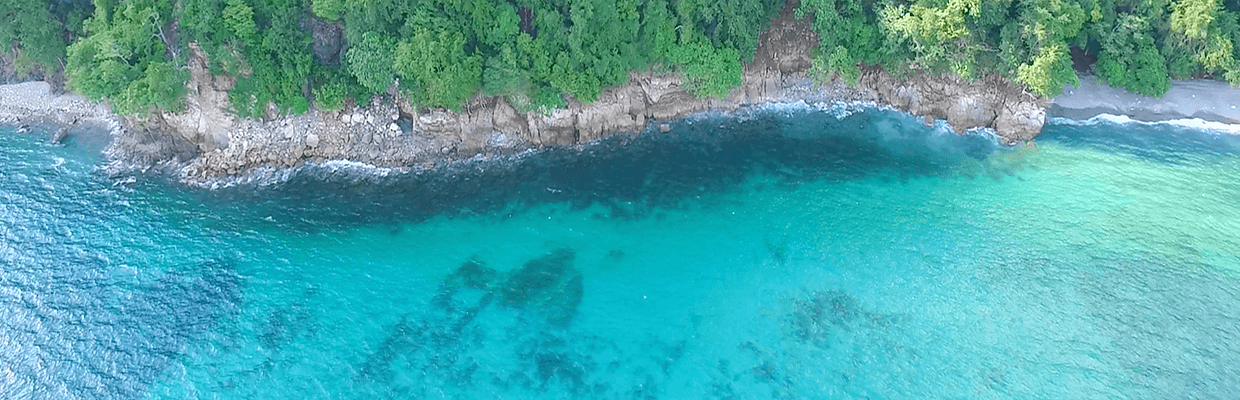
Curú National Wildlife Refuge and farm are located on the southern Nicoya Peninsula of northwestern Costa Rica. The area is teeming with abundant wildlife and hosts one of the most beautiful beaches and protected bays on the Nicoya Peninsula. The area offers easy access to seeing some of the most sought-after species such as White-faced Monkeys, Spider Monkeys, Scarlet Macaws, White-tailed Deer, Collared Peccary, Coati, Raccoons, Coyotes, Iguanas, and hundreds of species of tropical and migratory birds.
Curú contains Costa Rica's first private National Wildlife Refuge and is an example of a successful sustainable development program. The hacienda still includes low levels of cattle grazing and produces tropical fruits such as mangos on an annual basis. However, tourism and visitation by school groups and researchers are the focus of Curú today. Curú National Wildlife Refuge and farm are managed sustainably to produce a profit and local employment while also protecting its threatened and endangered forested habitats such as mangroves, tropical moist and dry forests, and coral reefs.
Our History
Curú was established in 1933 by Federico Schutt de la Croix. The area was transformed into a sustainable development project with multiple uses that included selective timber harvest and agricultural activities including rice, beans, corn, plantains, and later mangos and teak plantations. Cattle grazing also became an important activity, but agriculture would later be scaled back as conservation and ecotourism efforts began to be implemented.
In 1981, it received status from the Costa Rican government to protect its forests and mangroves. In 1983 Curú became Costa Rica's first private National Wildlife Refuge. The Schutt Valle family, who manages Curú Wildlife Refuge and farm, has converted the area into an eco-tourism location and research center for students and scientists from Costa Rica and around the world.
Our Refuge
The refuge covers a total of 1,496 hectares of protected forest, grazing land, and coastline.
- Total Area
- 1,496 hectares
- Protected Forest
- 1,100 ha
- Grazing & Agriculture
- 312 ha
- Refuge Core
- 84 ha
75% of the refuge
20% of the refuge
5% of the refuge
There are several trails throughout the refuge ranging from short and easy to long and very difficult.
There are several trails throughout the refuge ranging from short and easy to long and strenuous. Sendero Finca de Los Monos is one of the best trails to see birds and small mammals. The best time to go bird watching is early in the morning or at dusk, which is possible if visitors stay in one of the cabins. Visitors coming for a day trip should look for birds between 7-9 AM and 3-4 PM. Some trails are temporarily closed due to landslides — current status below.
Sendero Quesera
A strenuous hike leading to Playa Quesera, one of the refuge’s protected beaches. Reservation required — call the office.
5.1 km1.5 hours each wayStrong
Reservation required
Sendero Finca de Los Monos
One of the best trails to see birds and small mammals.
2.08 km1.5 hoursEasy
Best bird watching is early in the morning or at dusk — possible for guests staying in the cabins. Day visitors should look for birds between 7-9 AM and 3-4 PM.
Sendero Cangrejal
Formerly known as Sendero la Laguna — an easy walk near the estuary.
1.086 km45 minutes round tripEasy
Sendero Ceiba
An easy trail through the forest.
2.64 km1.5 hoursEasy
Sendero Toledo
An easy, shorter loop through the forest.
1.2 km45 minutes round tripEasy
Sendero al Puente Colgante del Estuario
A short walk to the estuary’s hanging bridge — also the start of the Finca de Los Monos trail.
450 m20 minutes round tripEasy
Sendero Mirador
A strenuous climb in its final 200 meters. The connection to Poza Colorada is currently closed due to landslides.
770 m30 minutesStrong
Sendero Killer
ClosedTemporarily closed due to landslides.
Sendero Avispero
ClosedTemporarily closed due to landslides.
Entrance Road to the Beach
The main road leading from the entrance gate down to the beach.
Our Species
Curú is home to an exceptional diversity of birds, mammals, reptiles, and plants.
- Bird Species
- 232
- Mammal Species
- 78
- Reptile Species
- 87
- Plant Species
- 500+
Birds
Orange-fronted Parakeet, Yellow-naped Parrot, Scarlet Macaw, Long-tailed Manakin, Lineated Woodpecker, Pale-billed Woodpecker, Hoffmann's Woodpecker, Osprey, Common Black Hawk, Barred Antshrike, Blue-crowned Motmot, Turquoise-browed Motmot, Black-headed Trogon, Violaceous Trogon, Elegant Trogon, Brown Pelican, Crested Caracara, Flycatchers, Tanagers, Vultures, Herons, Migratory songbirds and shorebirds (several species).
Mammals
White-faced Monkey, Spider Monkey, Howler Monkey, Raccoon, Coati, Squirrels, Anteater, White-tailed Deer, Armadillo, Tayra, Collared Peccary, Margay, Puma (Mountain Lion), Skunk, Kinkajou.
Conservation Projects
Reintroduction of the Scarlet Macaw(1999)
In 1999, Amigos de las Aves, a Costa Rican conservation organization, initiated a Scarlet Macaw (Ara macao) restoration program in Curú.
Coral Reef Restoration and Conservation(2002)
In 2002, a new Psammocora stellata coral reef was discovered in the Bay of Curú. This reef is one of only three known Psammocora reefs in all of Costa Rica.
Release of Spider Monkeys
The Set Us Free Project includes the reintroduction of the Spider Monkey (Ateles geoffroyi) in a remote area of the wildlife refuge.
Research Opportunities
Curú Wildlife Refuge and Hacienda provides a great opportunity for school groups and researchers (independent or enrolled in a school or university) to conduct studies in a tropical forest and beach setting. Accessibility to the site, an extensive trail system, a large protected bay, and pristine beaches — along with high densities of terrestrial and marine wildlife — make this an ideal setting for high school, college, and graduate students to conduct class or thesis research. Curú is also an ideal place for school groups to take courses in tropical ecology, biology, and environmental studies. Many international and Costa Rican students and groups have taken advantage of Curú's easy accessibility from San José and Puntarenas, and its dry and moist forest and marine habitats on the Nicoya Peninsula, to conduct research and classes. Current and past research has focused on White-faced Capuchin and Howler Monkey ecology, the ecology of several other mammal species, Scarlet Macaws and parrots, migratory birds, forest ecology, and — in the marine environment — fish diversity, coral reef mapping, and marine invertebrate surveying.
How to Get There
1. By Direct Bus
A direct public bus leaves San José twice a day, at 6:00 AM and 2:00 PM, via the Paquera ferry. Tell the driver to drop you at the entrance of Curú.
2. By Bus, Taxi & Ferry
Public buses leave San José regularly and drop passengers in Puntarenas. From there, take a taxi to the Paquera ferry. After arriving in Paquera, take another public bus and ask the driver to stop at the entrance to Curú. Check the Transportes Cóbano Facebook page for the current schedule.
3. Driving from San José
Drive to Puntarenas (2 to 3 hours depending on traffic), take the ferry to Paquera (1 to 1.5 hours), then drive to the entrance of Curú (30 minutes). The entrance will be on the left side.
4. By Air
Fly into Tambor airport (25 minutes from San José), then drive to the entrance of Curú (20 minutes).